Redesigning Influencer–Brand Collaboration for Structured Campaign Execution
Clickitfame is a platform that connects brands with influencers to create, manage, and execute marketing campaigns. I was responsible for redesigning the platform to improve campaign clarity, collaboration flow, and overall usability for both brands and influencers.
The goal was to transform an unstructured collaboration experience into a clear, end-to-end campaign management system.

Marketing
UX/UI Designer
Product redesign, UX structure, workflow optimization
Challenge
The existing platform had usability and workflow gaps that made campaign execution inefficient and unclear for both sides.
For brands:
Difficulty in discovering relevant influencers efficiently
No structured workflow for campaign creation and execution
Lack of visibility into campaign progress and performance
For influencers:
Unclear campaign expectations and deliverables
Fragmented communication across campaigns
Lack of transparency in approvals and payments
Core issue:
The platform supported connection, but not structured collaboration.
Key Insight
Through analysis of user behavior patterns and competitor research, I identified that:
The real problem wasn’t influencer discovery—it was the absence of a structured campaign lifecycle.
Without structure, collaboration became inconsistent, trust was reduced, and execution quality varied.
Design Goals
Improve clarity between brands and influencers
Centralize communication within campaigns
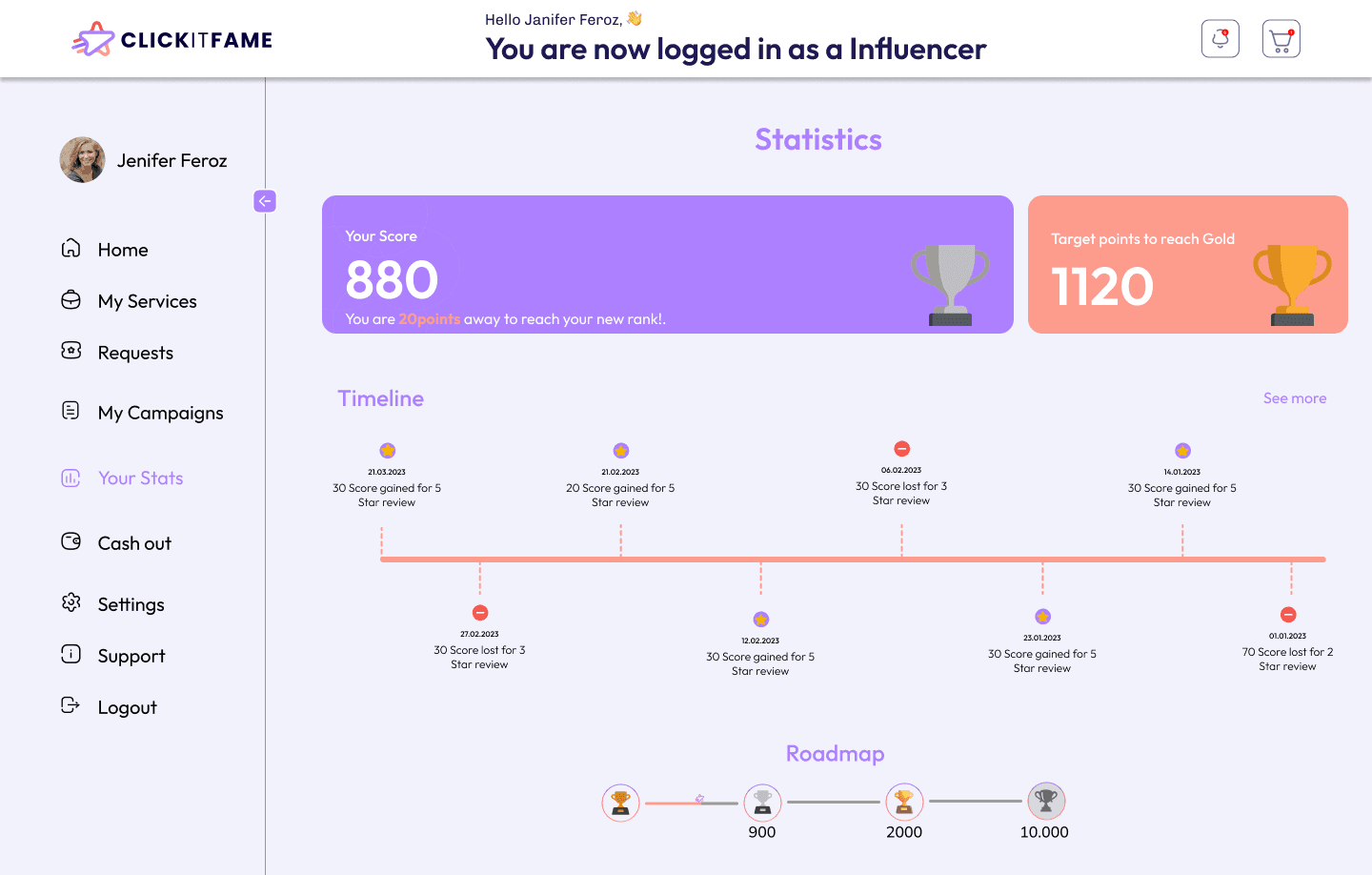
Build trust through transparency and progress tracking
Introduce a structured end-to-end campaign workflow


Solution
1. Structured Campaign Lifecycle
I designed a clear workflow:
Create Campaign → Invite Influencers → Approval → Execution → Review
This helped both sides understand:
What stage the campaign is in
What actions are required next
What deliverables are expected
2. Influencer Discovery System
I redesigned discovery with better filtering and clarity:
Niche-based categorization
Engagement-focused metrics instead of vanity metrics
Cleaner influencer profiles with campaign history
3. Campaign-Centric Communication
Instead of scattered messaging, communication was tied directly to campaigns.
This ensured:
Contextual conversations
Reduced miscommunication
Better tracking of discussions
4. Trust & Transparency Layer
To reduce friction and uncertainty, I introduced:
Clear deliverables per campaign
Defined approval stages
Visibility into campaign status
Key Design Decisions
Shifted from open collaboration → structured workflow system
Prioritized clarity over flexibility to reduce ambiguity
Centralized communication to avoid fragmented messaging


Conclusion
By focusing on the qualitative impact of these updates, we have significantly improved the clarity of the campaign execution flow and effectively reduced confusion between brands and influencers. Furthermore, the enhanced structure within the collaboration lifecycle provides a more organized framework that ensures better scalability for future campaign management features.